Honda CR-V 2026 vs Toyota RAV4 2026 Which Is More Reliable and Cheaper to Own
New Cars
|
March 18, 2026
Honda CR-V and Toyota RAV4 are two compact SUVs that have dominated their segment for years, and both have strong cases in 2026. But if reliability and total ownership cost are your primary filters, the differences between them are specific and worth knowing before you sign anything.
This comparison cuts through the marketing and focuses on what actually affects your wallet over five years of ownership.
Annual Maintenance Costs
RepairPal data places average annual maintenance costs for the Toyota RAV4 at approximately $429 per year. The Honda CR-V averages around $407 annually. That makes the CR-V marginally cheaper on routine maintenance, though the difference across a five-year ownership period amounts to roughly $110, which is not a deciding factor by itself.
What matters more than average maintenance cost is the frequency of unscheduled repairs. The RAV4 visits an unplanned repair shop less frequently than the class average, which means lower stress and fewer disruptions to your schedule beyond routine service. The CR-V performs similarly well on this measure, making both vehicles genuinely low-drama ownership propositions compared to the segment average.
Starting Price and Trim Lineup
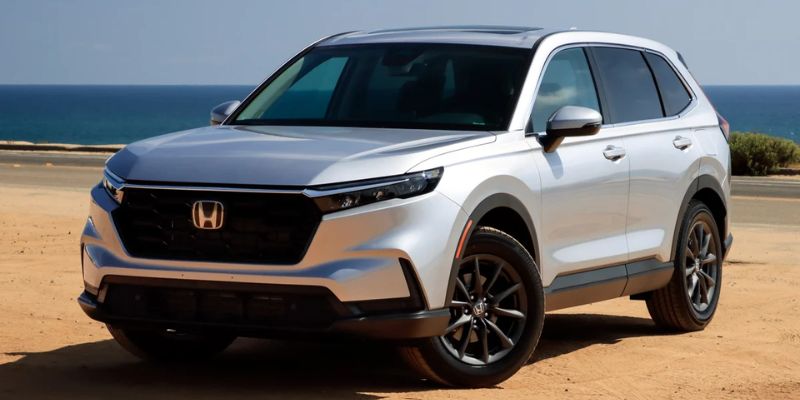
The 2026 Honda CR-V starts at $32,050 for the base EX trim with front-wheel drive. The CR-V Hybrid Sport starts at $35,000, and the top-spec Hybrid Sport-L with all-wheel drive reaches approximately $40,500. Honda no longer offers a base LX trim in most markets, which pushes the entry price higher than some buyers expect.
The 2026 Toyota RAV4 starts at $30,270 for the LE trim with front-wheel drive. The RAV4 Hybrid [1] XLE starts at $33,500, and the RAV4 Prime PHEV begins around $43,990. For buyers comparing base prices directly, the RAV4 enters the segment approximately $1,780 lower than the CR-V, which matters as a starting point for the total cost conversation.
Reliability Records: Reading the Data Honestly
This is where the comparison gets serious. Toyota's reliability reputation across its entire lineup has historically ranked above Honda's, and the RAV4 specifically benefits from a powertrain with over a decade of proven hybrid system performance. Owner complaint rates for the RAV4 Hybrid have been consistently low across multiple model years.
The CR-V has its own strong reliability record, though the 1.5-liter turbocharged engine in earlier model years drew documented complaints about oil dilution in cold climates. Honda addressed this through software updates and revised maintenance intervals, but it remains a known chapter in the CR-V's recent history. The current generation has performed more reliably, but it is a data point worth acknowledging honestly.
Fuel Economy: Where Hybrid Choices Split the Decision
The standard 2026 CR-V with a 1.5-liter turbocharged engine returns around 28 MPG city and 34 MPG highway, averaging approximately 30 MPG combined. The CR-V Hybrid improves that considerably to around 43 MPG combined with front-wheel drive, dropping to 40 MPG combined with AWD.
The standard RAV4 non-hybrid returns approximately 27 MPG combined, slightly behind the CR-V on gas alone. The RAV4 Hybrid returns around 40 MPG combined with standard AWD. When comparing equivalent hybrid trims head-to-head, the CR-V Hybrid holds a slight efficiency edge, but the gap is narrow enough that your actual driving pattern matters more than the EPA figures alone.
Insurance Costs Compared
Average annual insurance premiums for the 2026 RAV4 sit around $1,420 nationally. The CR-V averages approximately $1,460 per year under similar coverage assumptions. Neither figure is alarming, but the RAV4's slightly lower insurance cost reflects its repair cost profile and parts pricing.
Insurance premiums vary significantly by state, driving record, and coverage level, so these national averages are directional rather than prescriptive. Buyers in urban markets with higher claim rates should get specific quotes for both vehicles before drawing conclusions. The national average insurance cost [2] difference between these two is small enough that it should not drive the final decision independently.
Cargo Space and Interior Practicality
The 2026 CR-V offers 39.2 cubic feet of cargo space behind the rear seats, expanding to 76.5 cubic feet with seats folded. The 2026 RAV4 provides 37.6 cubic feet behind the rear seats and 69.8 cubic feet with seats folded. The CR-V wins on raw cargo volume, and the difference is noticeable when loading for a family trip or moving larger items.
The CR-V also benefits from a more thoughtfully organized cargo area with lower load floor height on most trims, making it easier to lift heavy items in and out. RAV4 owners occasionally note that the load floor sits slightly higher relative to the bumper, which becomes mildly annoying during repeated heavy loading. Small frustration, but real over years of use.
Interior Technology and Infotainment
The 2026 CR-V Sport and above use a 9.0-inch touchscreen with wireless Apple CarPlay and Android Auto. Honda also includes physical climate controls below the infotainment display, a decision that feels increasingly wise as other manufacturers bury temperature adjustments inside touchscreen menus. The overall layout is intuitive enough that most drivers feel comfortable within the first week.
The 2026 RAV4 uses a 10.5-inch touchscreen on XLE and above trims, with a cleaner visual interface than earlier RAV4 generations. Physical volume and tuning controls are retained. One consistent complaint among RAV4 owners is that the base LE trim's 7.0-inch screen feels undersized in 2026 context, and upgrading to XLE adds approximately $2,000 to the purchase price specifically to access the larger display.
Passenger Space and Ride Comfort
The CR-V rear seat offers 40.9 inches of legroom, which is genuinely comfortable for adult passengers on longer trips. The RAV4 provides 37.8 inches of rear legroom, a meaningful difference that taller passengers notice immediately. Families who regularly carry adults in the back seat will find the CR-V more accommodating without question.
Ride quality favors the RAV4 on rough pavement. Toyota's suspension tuning absorbs road imperfections with slightly more composure than the CR-V at highway speeds and on deteriorated urban roads. The CR-V rides well by compact SUV standards, but the RAV4's suspension calibration feels a touch more refined during extended highway driving, which adds up on a long Friday afternoon commute.
Off-Road Capability Comparison
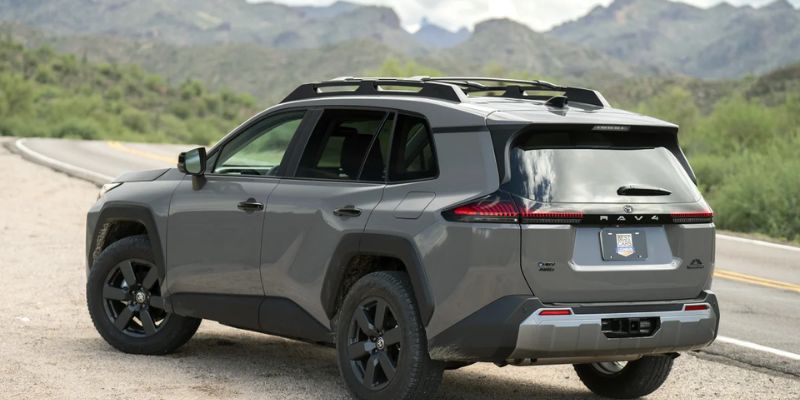
Neither vehicle is a serious off-road machine, but the RAV4 builds a more convincing case for light trail use. The RAV4 TRD Off-Road and Adventure trims add multi-terrain select, locking rear differential function, and increased ground clearance at 8.6 inches for those specific trims. Standard RAV4 ground clearance sits at 8.4 inches.
The CR-V's ground clearance measures 8.2 inches on AWD trims, with no dedicated off-road package available in the 2026 lineup. For buyers who camp, ski, or occasionally use unpaved forest roads, the RAV4's off-road orientation is a genuine differentiator. For buyers whose most adventurous terrain is a gravel driveway, neither vehicle's off-road specs matter in practice.
Five-Year Total Cost of Ownership
Running the full calculation across purchase price, fuel, insurance, maintenance, and estimated depreciation produces a more complete picture than any single category comparison. The RAV4 Hybrid XLE at $33,500 with AWD, returning 40 MPG combined over 75,000 miles, carries estimated five-year fuel costs around $6,200 at current average prices.
The CR-V Hybrid Sport at $35,000 with AWD, returning 40 MPG combined, produces nearly identical fuel costs. The five-year ownership cost [3] difference between equivalent hybrid trims of these two vehicles, factoring in depreciation rates, comes out to roughly $800 to $1,500 in the RAV4's favor, driven primarily by stronger resale value and lower entry price.
Which One to Buy and When
For buyers whose top priority is long-term reliability confidence and maximum resale value, the RAV4 Hybrid edges ahead. Toyota's established hybrid track record, stronger resale percentage, and consistently low unplanned repair frequency make it the lower-risk five-year proposition.
For buyers prioritizing passenger space, cargo volume, and daily interior usability, the CR-V Hybrid is the stronger practical choice. The additional cargo room, better rear legroom, and more intuitive infotainment layout address daily family needs more completely than the RAV4 at equivalent price points.
Before finalizing either vehicle, request out-the-door pricing from multiple dealers on the specific trim and package you want. Both models carry strong demand, which limits negotiation room, but end-of-quarter timing and competing dealer quotes can still move the price meaningfully. Run a specific five-year cost estimate using your actual annual mileage and local fuel prices before treating any general comparison as your final answer.
References
[1] Toyota Official Site – https://www.toyota.com
[2] National Highway Traffic Safety Administration – https://www.nhtsa.gov
[3] U.S. Department of Energy Fuel Economy – https://www.fueleconomy.gov
Related Posts

How To Choose the Right Windshield Wipers for Your Car Model

OBD2 Scanners Explained How To Diagnose Your Car Using Your Phone

10 Must-Have Car Accessories for Rainy Season That Actually Keep You Safe

13 Best Accessories to Survive Long Traffic Hours Without Losing Your Mind

Best New Cars for Daily Driving in 2026 Maximum Comfort, Minimum Fuel Costs